
Georgia Parole Systems for Polk
The Georgia State Board of Pardons and Paroles is the decision authority for parole-eligible state prisoners. Polk County Jail, Polk Superior Court, GDC, and DCS have separate roles. The jail records county custody. The court imposes the sentence. GDC holds state prisoners. The Board grants or denies parole, while DCS supervises many people after release.
A Polk jail departure can be a transfer to GDC rather than community release. Once GDC custody begins, the county roster is no longer the right source for state parole timing. Use the GDC offender search to verify state custody, then use the Board's systems for a tentative parole month or existing parolee status.
This map entry represents a statewide online system, not a physical Polk County detention facility. It does not accept a person released at a gate or issue county booking records. Its value is establishing the next stage after a state sentence.
How Georgia Parole Review Works
The Board's parole process describes file review, investigations, votes, tentative decisions, denials, and reconsideration. Ordinary consideration is not a routine live adversarial hearing attended by the inmate. The Board reviews the official case file and legally relevant information, then its members vote.
For a non-life, parole-eligible case, the Board may establish a Tentative Parole Month, known as a TPM, or deny parole entirely. At final review, it may set an effective parole release date when appropriate. It can also postpone, cancel, withdraw, or otherwise change an earlier decision before release.
Life-sentence cases follow different decision rules and do not use the guidelines and TPM model in the same way. A public searcher should use the result shown for the individual case and avoid applying another person's schedule.
- Eligibility
- The legal point when the Board may consider parole.
- TPM
- A tentative month for final review, not a promised release.
- Effective release date
- The date set after final action when parole release is approved.
- Denial
- A Board decision not to grant parole at that review.
- Reconsideration
- A later review or change permitted under the Board process.
Search a Polk Parole Case
Choose the lookup by custody stage. The Inmate TPM Lookup addresses possible parole timing for a person still in state custody. The Parolee Database addresses people already released on parole.
- Confirm through GDC that the person is or was in Georgia state custody.
- Use the TPM system when the question concerns future parole review.
- Compare the name and available identifiers before opening a result.
- Use the Parolee Database when release on parole may already have occurred.
- Contact the Board or DCS when the displayed status needs official clarification.
A TPM is not proof that the person has left prison. A parolee result can support post-release verification, but the Cedartown DCS Field Office is the local supervision contact serving Polk. County misdemeanor probation uses a different Polk office.
Read a Polk Tentative Month
The Board's TPM explanation says the month marks expected final review. It is conditioned on good conduct and may depend on program completion. Misconduct reports can postpone or cancel it. The Board retains discretion until the effective release.
A TPM can also interact with GDC Performance Incentive Credit. GDC states that eligible offenders may receive one to twelve months off a TPM or Maximum Release Date through qualifying case-plan work, education or vocational progress, and work assignments. Credit can move a planning point, but it does not convert the TPM into a guarantee.
Georgia Parole Eligibility Rules
O.C.G.A. 42-9-45 supplies the general parole-consideration rule. Many felony inmates become eligible after nine months or one-third of the sentence, whichever is greater, subject to listed exceptions. The Board explains that few people receive parole at the first eligibility point.
O.C.G.A. 17-10-6.1 governs serious violent felony restrictions. The Board states that people serving covered non-life sentences for crimes committed on or after January 1, 1995 are not eligible for parole consideration. Life-sentence eligibility varies by the offense date under published historical rules.
The Board's eligibility and guidelines page also discusses offense severity, risk information, detainers, and other review factors. No public formula can predict an individual vote. Legal eligibility only opens the possibility of consideration.
Georgia Board Meetings and Notices
The Board publishes meeting videos and public notices, but research did not find a county-by-county parole-hearing calendar. Its video archive lists periodic Board meetings across multiple months. Those meetings are public-agency events, not a schedule of ordinary inmate parole appearances.
The official meeting archive shows the published format.
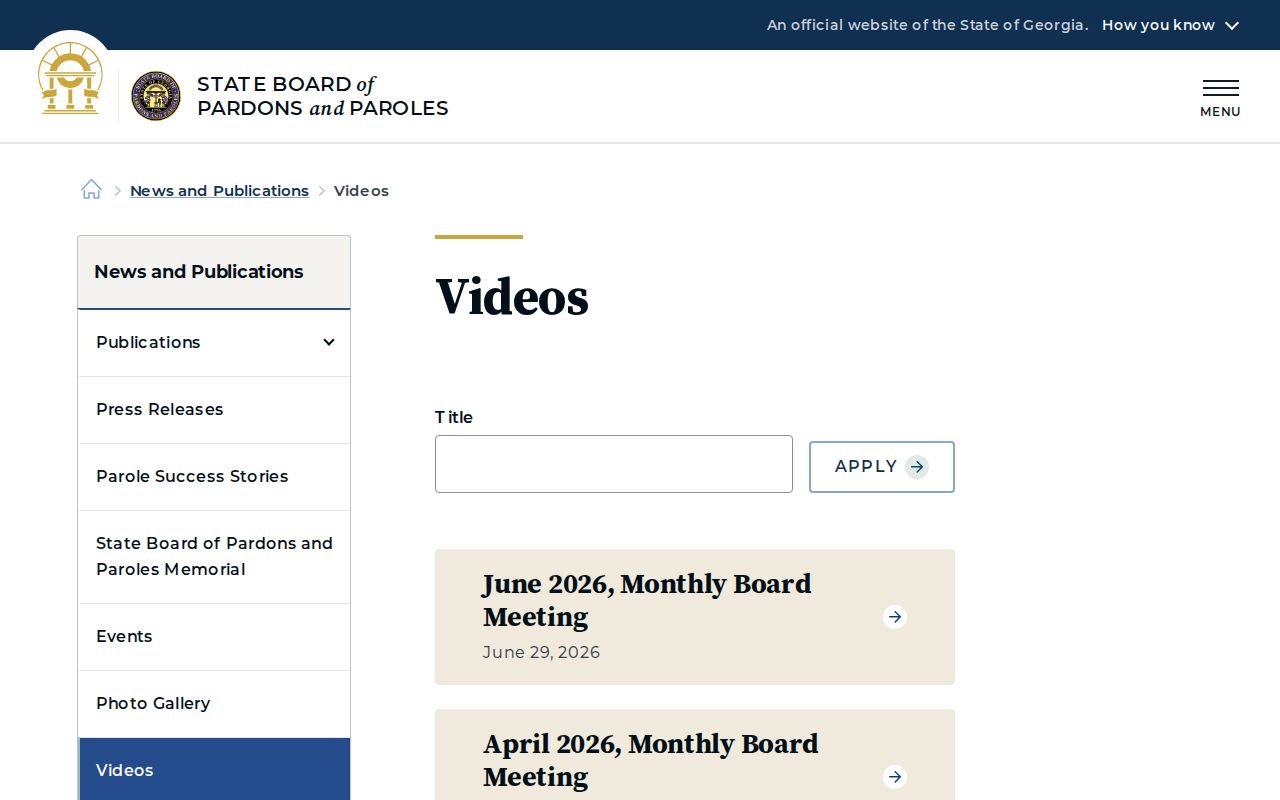
The archive helps track Board business without implying that every Polk case receives a listed live hearing.
Public notices also document scheduling changes. The Board's July 2026 notice cited O.C.G.A. 50-14-1 when announcing a canceled meeting.
The Board's meeting-cancellation notice is an example.
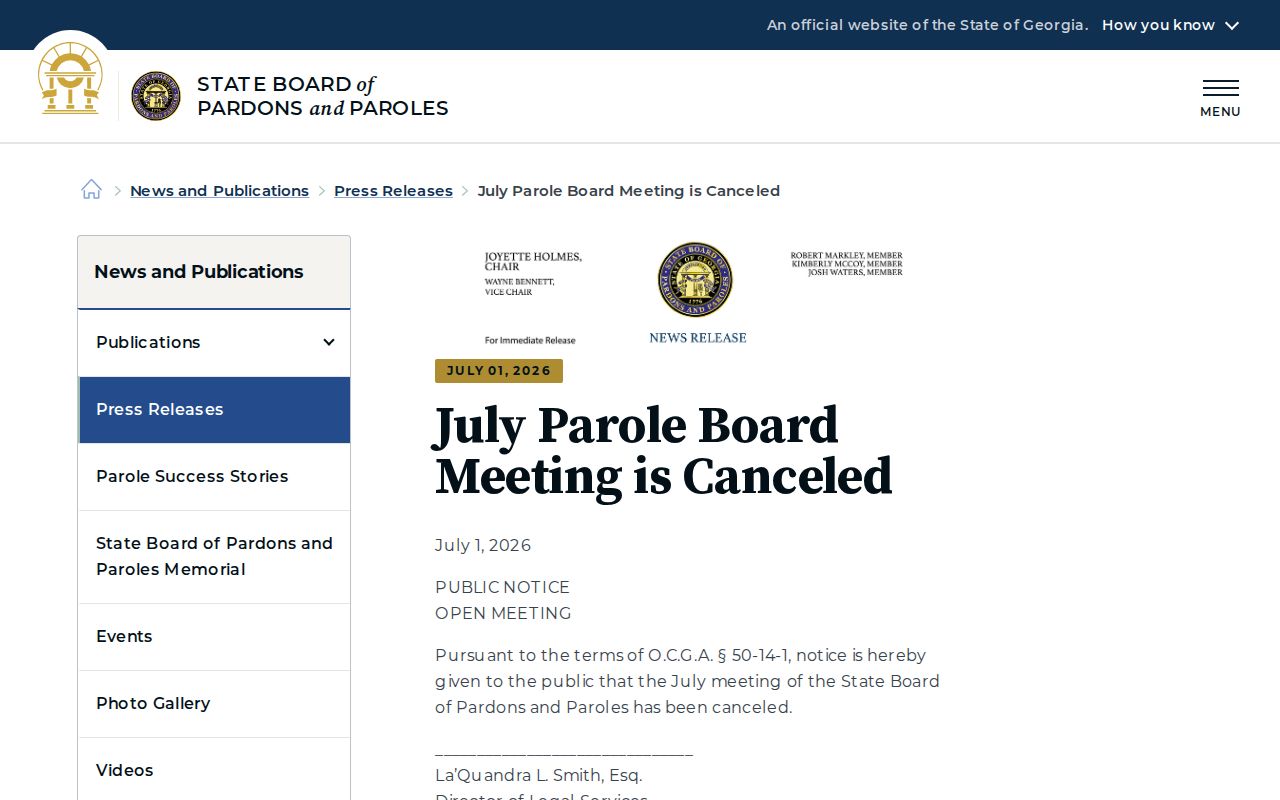
The notice concerns the public meeting schedule, not cancellation of a named prisoner's parole review.
Confirm a Polk Parole Outcome
A Board outcome may be a TPM, denial, later reconsideration, an effective release, or a change before release. For eligible life-sentence cases, the Board grants or denies parole under the applicable rules rather than using the same TPM guidelines model. Read the current official status instead of treating an old notice as final.
| Question | Correct source |
|---|---|
| Still in Georgia prison? | GDC offender search |
| Future parole review month? | Inmate TPM Lookup |
| Already released on parole? | Parolee Database |
| Local felony supervision? | Cedartown DCS Field Office |
| County misdemeanor probation? | Polk County Probation Office |
| Case sentence or disposition? | Sentencing court |
VINELink may provide a custody-change alert through a participating feed, but it does not replace the Board decision or GDC release record. Likewise, disappearance from the Polk jail roster cannot establish parole.
Polk Supervision After Parole
The Cedartown DCS Field Office serves Polk, Haralson, and the Tallapoosa Circuit. It is the concrete local route for felony probation and parole supervision after release. The office is at 100 County Loop Road, Suite A, Cedartown, GA 30125, with phone 770-749-2206 and published hours Monday through Friday, 8:00 a.m. to 4:30 p.m.
Polk County's local probation page says misdemeanor reporting is by appointment and directs felony probation questions to DCS. This distinction prevents a parole question from being sent to the county misdemeanor office. The Board decides parole, while DCS manages the community term.
Formal discharge ends supervision. Leaving prison begins parole only when the Board's effective action says so. Verify discharge through the supervising authority rather than assuming that a public search result disappeared because the sentence ended.
Request Georgia Parole Records
Georgia's Open Records Act makes many agency records available, but public access does not mean every parole file detail is released. Investigative material, security information, medical information, personal data, and other protected records may be withheld or redacted. A focused request should identify the person, record type, and relevant date rather than ask for an unrestricted file.
Use the Board for its decision and public parole-status records. Use GDC for the institutional custody and sentence record. Use DCS for the local supervision record after release. Polk County's general records portal does not control these state-agency files. Likewise, the county court clerk controls the judgment and docket, not the Board vote.
A durable verification set may include the court sentence, current GDC status, the Board's TPM or decision status, and a DCS supervision confirmation after release. These records create a timeline without asking one system to prove facts owned by another.
Planning for a Polk Parole Release
A tentative month can support cautious planning, but transportation, residence, appointments, and property arrangements should be confirmed near the effective date. An acceptable residence plan or required program may remain unresolved. A detainer may also turn the end of GDC custody into transfer to another agency rather than release into Polk County.
GDC states that remaining account funds for a released state prisoner may transfer to a Georgia Release Card. That state-prison process is separate from Polk County Jail property procedures. The card detail can help identify a GDC release, but it does not confirm parole by itself.
After release, follow the certificate and DCS instructions. Public summaries cannot define a named person's travel, reporting, residence, or program conditions. The supervising officer and official order control those requirements. Verify the effective date again before making a pickup trip, because a tentative decision can still change. Keep the GDC and Board identifiers available when asking either agency to clarify the current stage.